
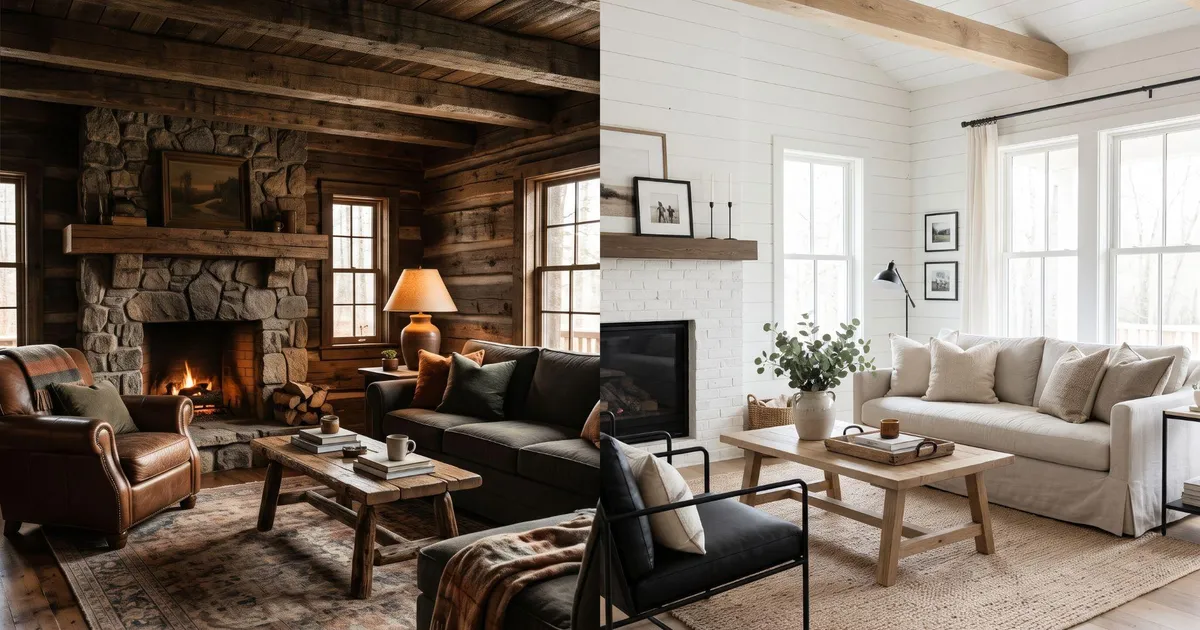
Open ten “farmhouse” homes online, and you’ll probably see ten totally different rooms! One has dark log walls and a stone fireplace. Another is white, bright, and full of black metal accents.
I’ve mixed these two up more times than I’d like to admit. If you’re stuck on rustic vs modern farmhouse, you’re in good company. The names get tossed around like they mean the same thing, and they really don’t.
Why does it matter? Because the style you pick decides your paint, your furniture, your lighting, and a whole lot of your budget. In this guide, I’ll break down the real differences in plain English, so you can shop with confidence and skip the costly do-overs I made.
What Is Rustic Style? (Quick Definition and Key Features)
Rustic style is a design look built on natural, rough, and weathered materials. It leans on wood, stone, leather, and iron, and it values a cozy, lived-in feel over polish. If a room feels like a mountain cabin or an old lodge, it’s probably rustic.
I first fell for rustic decor at a friend’s family cabin, years ago. Every beam had knots and saw marks, and the coffee table was basically a thick slab of tree with legs. I remember thinking, “Nothing in here is trying to impress me,” and that was exactly why I loved it.
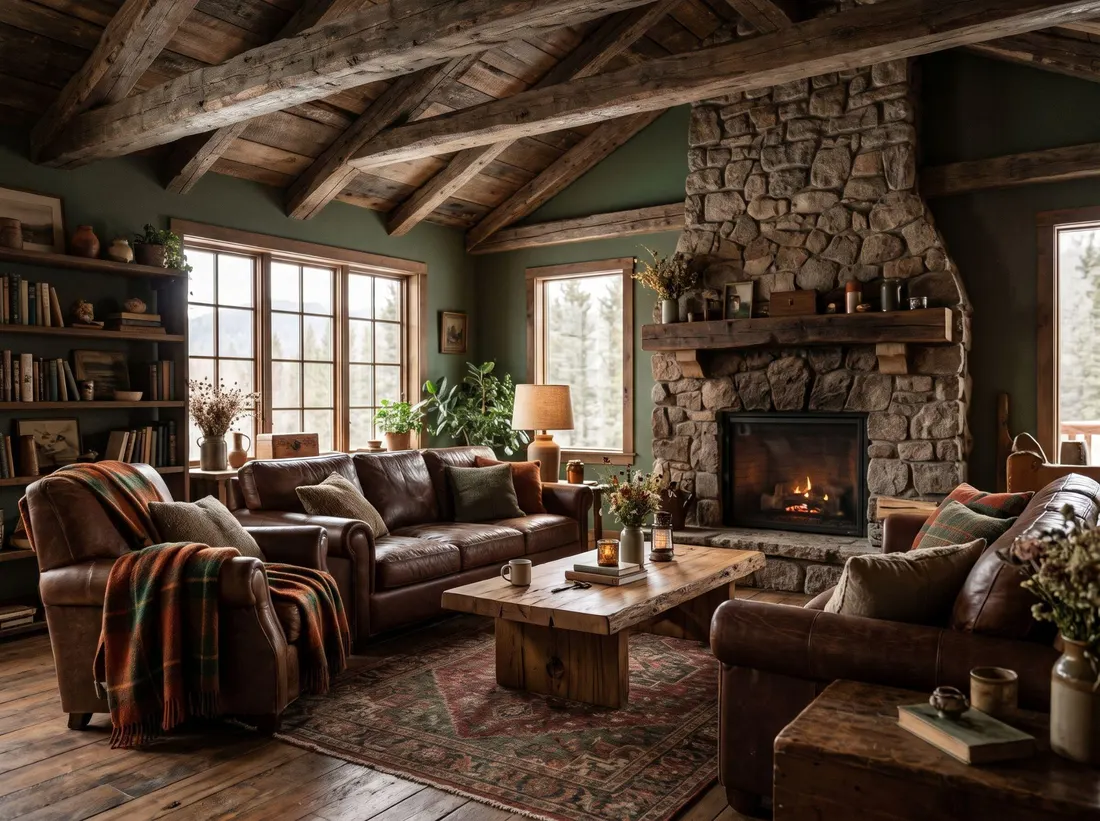
Here’s the thing about rustic. Imperfection is the whole point. A scratch on the table or a crack in a beam isn’t a flaw, it’s character.
Rustic rooms usually include a few signature features:
- Exposed or reclaimed wood, like beams, mantels, and plank walls
- Natural stone, especially on fireplaces
- Heavy, chunky furniture with visible grain
- Earthy colors like brown, rust, forest green, and warm cream
- Wrought iron, antlers, and aged metal accents
Rustic also comes in a few flavors. Lodge style is big and bold, with lots of logs and leather. Cabin style is smaller and simpler. Then there’s “rustic chic,” a softer version that mixes in lighter fabrics and a little sparkle.
The mood matters as much as the materials. Rustic is warm, slow, and a bit moody, like a rainy afternoon with a blanket and a book. It’s the opposite of a showroom.
My biggest early mistake was going all-in on dark wood. I bought a dark pine entertainment center, a dark coffee table, AND dark end tables in one weekend. The room looked like the inside of a cigar box, and not in a good way.
Lesson learned: rustic needs contrast. Mix your wood tones, add lighter textiles like wool or linen, and let in as much natural light as you can. Even one cream-colored rug can keep the whole space from feeling heavy.
The style also has practical roots. Historically, rustic design grew out of using whatever was close by, like local timber and fieldstone. That’s a big reason the look still feels so grounded.
Here’s a quick tip if you’re not sure a piece is rustic. Check the surface. Can you see the grain, the knots, or hand-worked edges? If everything is smooth, glossy, and perfectly even, it’s likely not rustic.
What Is Modern Farmhouse Style? (Quick Definition and Key Features)
Modern farmhouse is a style that blends classic farmhouse charm with clean lines and a brighter, more updated look. It usually features white or light walls, black metal accents, shiplap or board-and-batten, and simple, comfortable furniture. It feels fresh and airy instead of dark and heavy.
I’ll be honest, I rolled my eyes at modern farmhouse for a while. Every house online seemed to have the same white walls, the same black light fixtures, and the same “Gather” sign. Then I helped a friend redo her living room, and I finally got it.
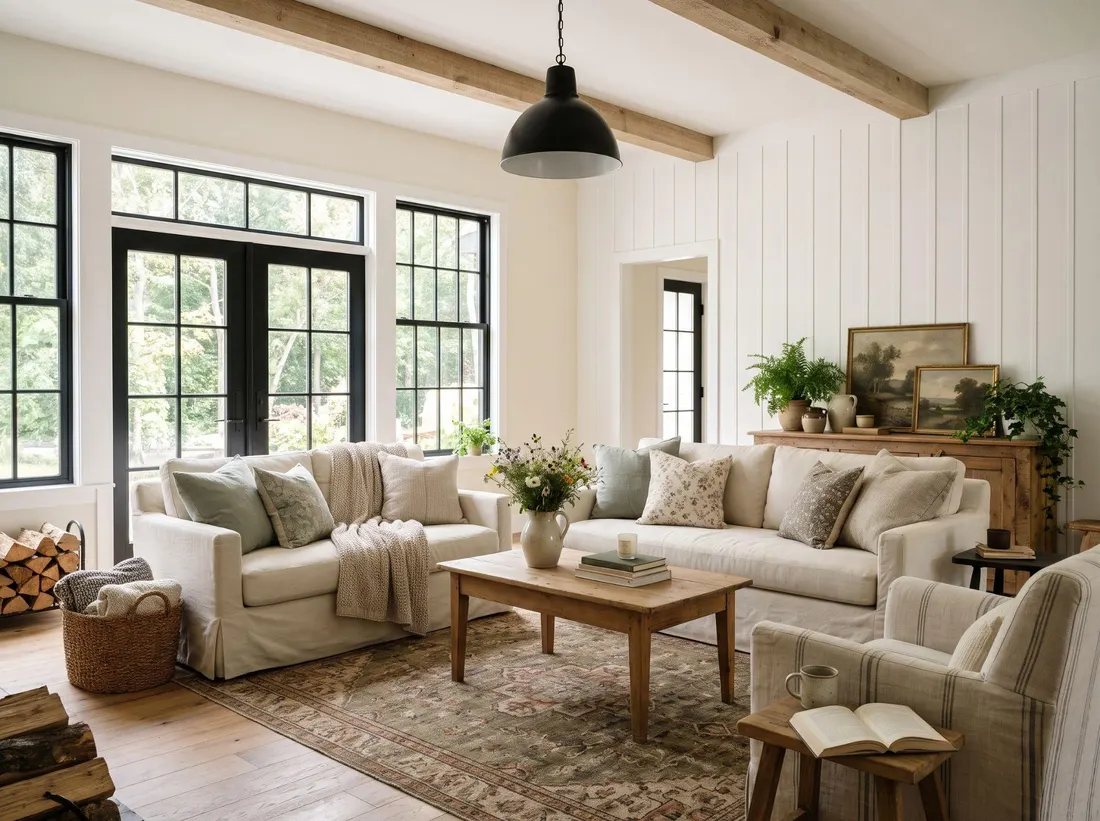
The space felt calm. Light bounced off the walls, everything was easy to wipe down, and the black accents gave it just enough punch. It was farmhouse, but tidy.
Modern farmhouse rooms tend to share these features:
- White, cream, or soft gray walls
- Black or matte metal on hardware, lights, and window frames
- Shiplap, beadboard, or board-and-batten paneling
- Furniture with simple shapes and straight lines
- Lighter wood tones with a smoother finish
- Mixed materials like galvanized metal, glass, and woven baskets
The word “modern” is doing real work here. Lines are cleaner, clutter is lower, and the whole room feels edited. A rustic room says, “Come sit by the fire.” A modern farmhouse room says, “Come sit, and by the way, the counters are spotless.”
Families tend to love this style, and I get why. Slipcovered sofas can go in the wash, light floors hide crumbs better than you’d think, and the bright colors make small rooms feel bigger. It’s a forgiving look for real life.
Of course, I made my own mistake here too. I got excited and added shiplap to one wall, then another, then the ceiling. Suddenly the room felt like the inside of a boat!
My fix was simple: pick ONE feature wall. Let the shiplap or board-and-batten be the star, and keep the other walls plain. Restraint is the secret ingredient in this style.
One more thing. Because modern farmhouse has become so popular, it can start to look like a catalog page. Personal touches are what save it, so add a thrifted frame, a family quilt, or a vintage bread board. Those little pieces make the room yours.
Many people trace the look back to simple American farmhouses, which were practical and plain. The modern version was boosted by home renovation shows and social media. It kept the cozy, welcoming spirit and swapped the heaviness for light.
Rustic vs. Modern Farmhouse: Key Differences Side by Side
The short answer is this: rustic style is rugged, dark, and natural, while modern farmhouse is bright, clean, and polished. Both borrow from country living, but they get there in very different ways. Here’s the quick comparison.
| Feature | Rustic | Modern Farmhouse |
|---|---|---|
| Overall mood | Cozy, rugged, lodge-like | Bright, clean, welcoming |
| Color palette | Brown, forest green, rust, warm neutrals | White, cream, soft gray, black accents |
| Wood | Rough, reclaimed, dark or natural, visible knots | Lighter, smoother, often painted or whitewashed |
| Shapes | Chunky, irregular, handmade look | Clean, simple, balanced |
| Metals | Wrought iron, aged bronze, copper | Matte black, brushed nickel, galvanized |
| Textiles | Wool, leather, fur, flannel | Linen, cotton, slipcovers, light knits |
| Walls | Log, stone, plank, exposed beams | Shiplap, board-and-batten, painted drywall |
| Lighting | Antler or iron chandeliers, lanterns | Black pendants, sleek sconces |
| Overall feel | Layered and collected | Edited and tidy |
When people ask me the difference, I tell them to think about mood first. Rustic feels like a cabin in the woods on a snowy night. Modern farmhouse feels like a sunny kitchen on a Saturday morning.
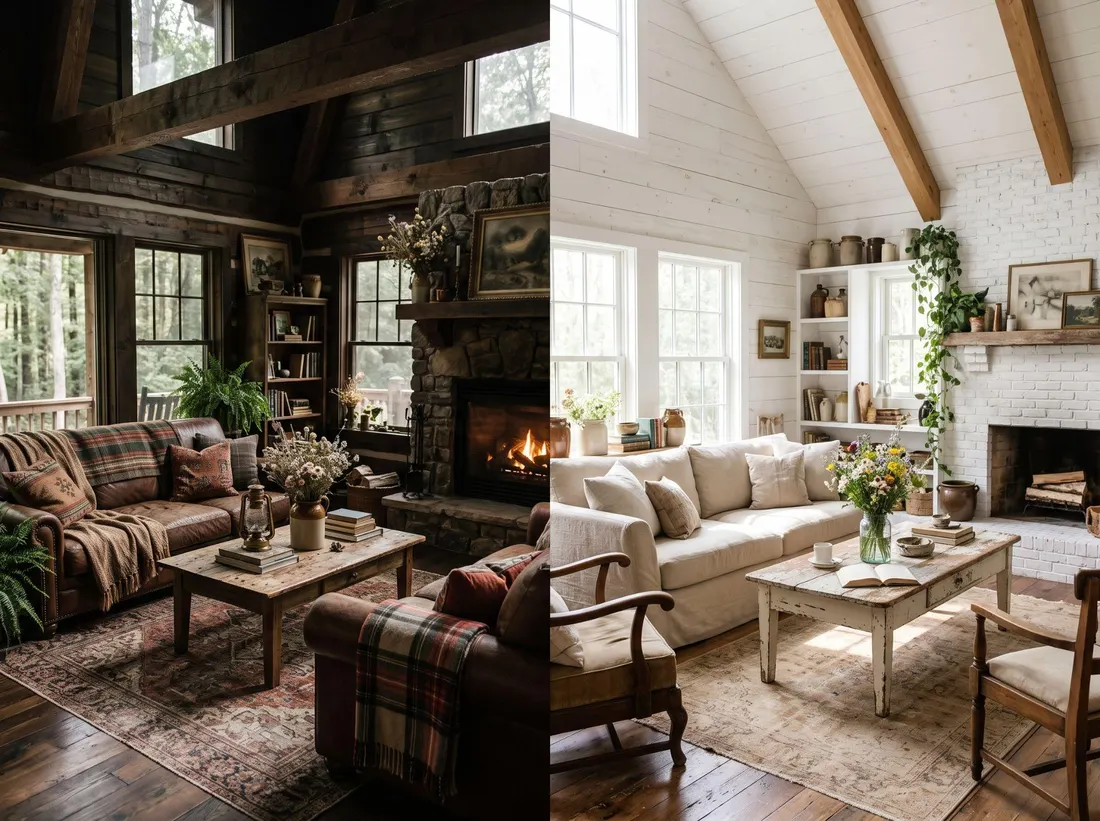
Now for the details. In a rustic room, wood is the star, and it’s usually rough, dark, or visibly aged. In a modern farmhouse room, wood plays a supporting role, and it’s often lighter and smoother.
Color is the fastest giveaway. Rustic leans on earthy shades like brown, rust, and forest green. Modern farmhouse starts with white and adds black for contrast.
Shape matters too, and this one took me a while to notice. Rustic furniture tends to be chunky and a little uneven, like somebody built it by hand. Modern farmhouse pieces are straighter and simpler, with cleaner edges.
Walls and lighting separate them as well. Rustic rooms often have log walls, stone, or plank ceilings, with antler or iron chandeliers overhead. Modern farmhouse rooms go with shiplap or painted drywall and sleek black pendants.
Here’s a trick I use, and I call it the squint test. Look at a photo and squint until the details blur. If you see mostly dark, warm shapes, it’s rustic. If you see mostly white with small black dots, it’s modern farmhouse.
I once pinned two living room photos side by side, sure they were the same style. Both had a fireplace, a wood mantel, and a cozy throw. A designer friend laughed and said, “One’s a lodge and one’s a farmhouse.” After that, I couldn’t unsee it.
Of course, there’s some overlap, and that’s where people get confused. Both use wood, both love natural materials, and both feel welcoming. Plenty of homes land somewhere in the middle, which is totally fine.
One more mistake to avoid: calling anything with a sliding barn door “rustic.” A barn door in a glossy white room doesn’t make the room rustic. It’s just a door!
When in doubt, ask yourself three questions. Is it dark or light? Rough or smooth? Layered or edited? Your answers will point you to the right label.
Colors, Materials, and Textures: How Each Style Handles Them
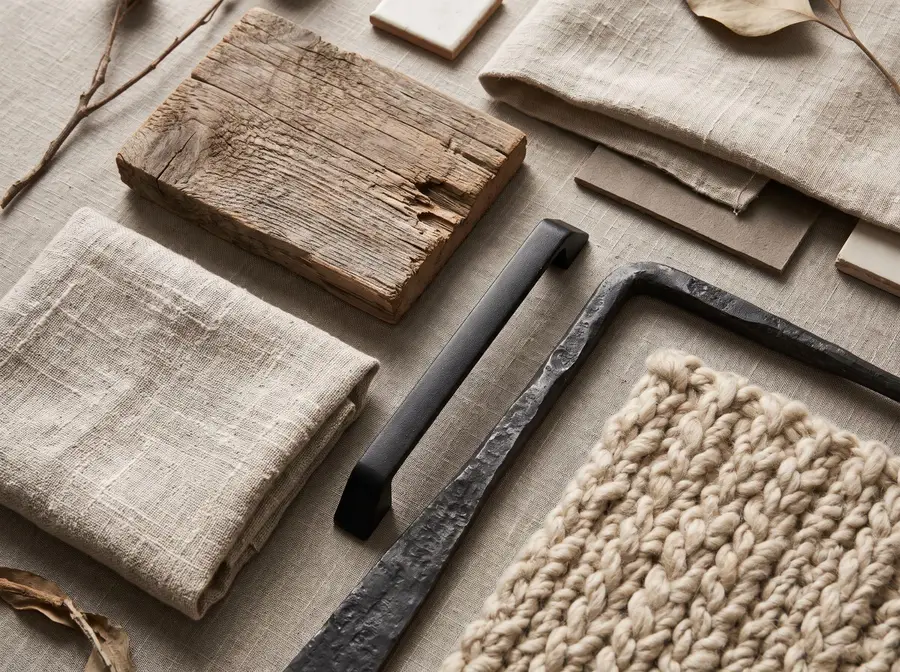
The biggest material differences come down to wood finish, metal color, and fabric. Rustic uses rough, dark, or reclaimed wood with iron, leather, and wool. Modern farmhouse uses lighter wood with matte black metal, linen, and cotton.
Let’s start with color, since it sets the tone for everything else. Rustic palettes pull from the outdoors: chocolate brown, deep green, barn red, burnt orange, and warm tan. Modern farmhouse starts with white or cream, then adds soft gray, sage green, and black.
I learned a hard lesson about white paint. For my first living room, I grabbed a swatch under the store lights and called it a day. On my wall, it looked kind of icy blue, and I was NOT happy.
I repainted two weekends later, grumbling the whole time. Now I always test a big sample on the wall and check it in the morning, at noon, and at night. Warm whites with a cream or yellow undertone feel cozy and work in both styles, while cool whites can feel cold in rooms with little sun.
Now let’s talk wood, because this is where the styles split the most. In rustic design, you want to see the story: knots, cracks, saw marks, and uneven edges. Reclaimed barn wood, hand-hewn beams, and live-edge slabs are classic picks, usually in a matte or satin finish.
Modern farmhouse wood is calmer. Think light oak, whitewashed pine, or painted pieces with a touch of natural distressing. It’s smoother and more even, so it doesn’t fight with the clean lines around it.
Metals are next. Rustic rooms love wrought iron, aged bronze, and copper, which have a worn, warm look. Modern farmhouse leans on matte black, brushed nickel, and galvanized metal for a crisp finish. My tip is to stick with two metals at most, or the room starts looking busy.
Stone shows up in both, just in different ways. Rustic fireplaces often use chunky fieldstone or river rock that goes right up to the ceiling. Modern farmhouse might use painted brick, a whitewashed stone, or simple smooth tile.
Textiles are where you can really feel the difference. Rustic uses wool blankets, leather, sheepskin, flannel, and faux fur. Modern farmhouse prefers linen, cotton, washable slipcovers, light knits, and a bit of plaid.
I once bought a cream sofa without a washable cover. One spilled glass of red wine later, I learned my lesson the expensive way. Now I always check if the fabric can be cleaned, especially on light-colored pieces.
Here’s my best texture tip: layer at least three different textures in the room. Try something smooth, something chunky, and something soft. A leather chair, a wool throw, and a linen pillow can make a plain room feel rich without adding any clutter.
Furniture, Lighting, and Decor: What Each Style Looks Like in a Living Room
In a living room, rustic furniture is heavy, wooden, and leather-heavy, while modern farmhouse furniture is lighter, simpler, and often slipcovered. Lighting follows the same pattern, with iron and antler fixtures for rustic and black metal pendants for modern farmhouse. The details below will help you spot (and shop for) each one.
Start with the sofa, since it’s the biggest piece. A rustic sofa is usually deep and overstuffed, often in brown or tan leather. A modern farmhouse sofa tends to have straight arms and a washable linen or cotton cover in white, cream, or gray.
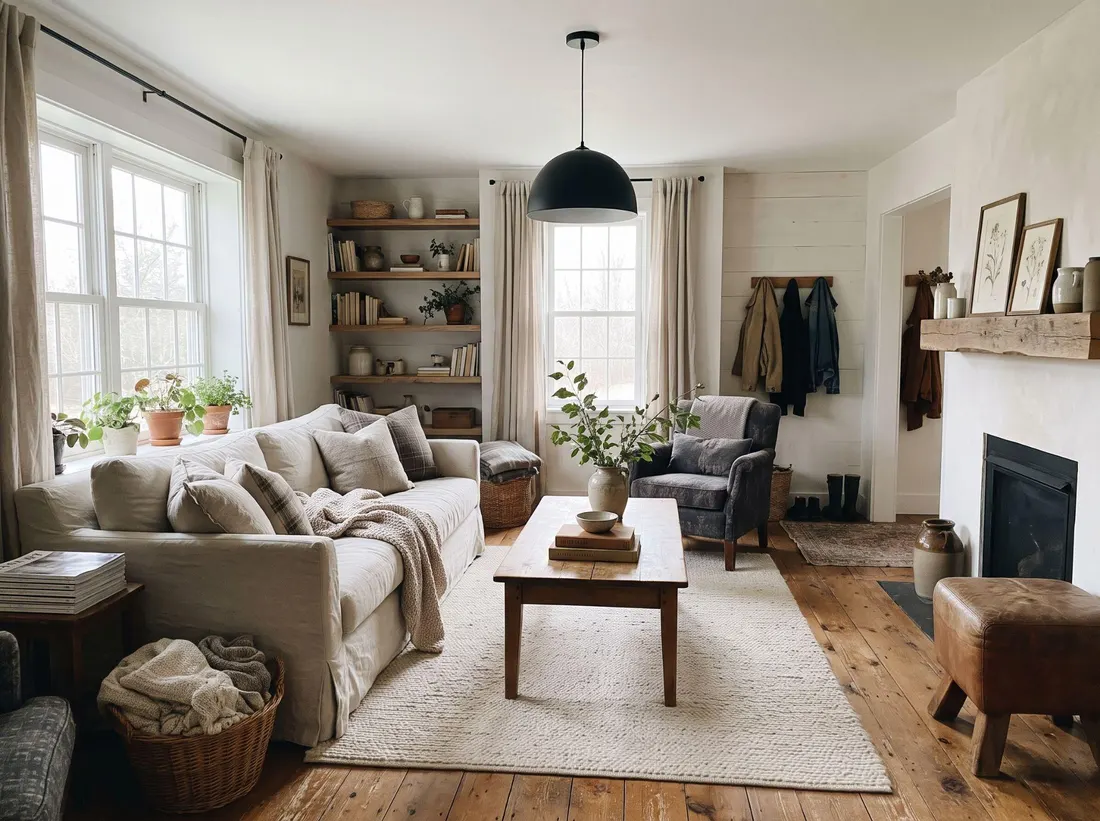
Next is the coffee table. For rustic, look for a thick wood slab, a trunk, or a table with log-style legs. For modern farmhouse, a simple rectangular wood table, maybe with an X-shaped base or metal frame, fits right in.
I messed this one up big time once. I fell in love with a giant reclaimed-wood coffee table online, and when it arrived, it blocked the whole walkway! A good rule is to leave about 14 to 18 inches between your sofa and your coffee table.
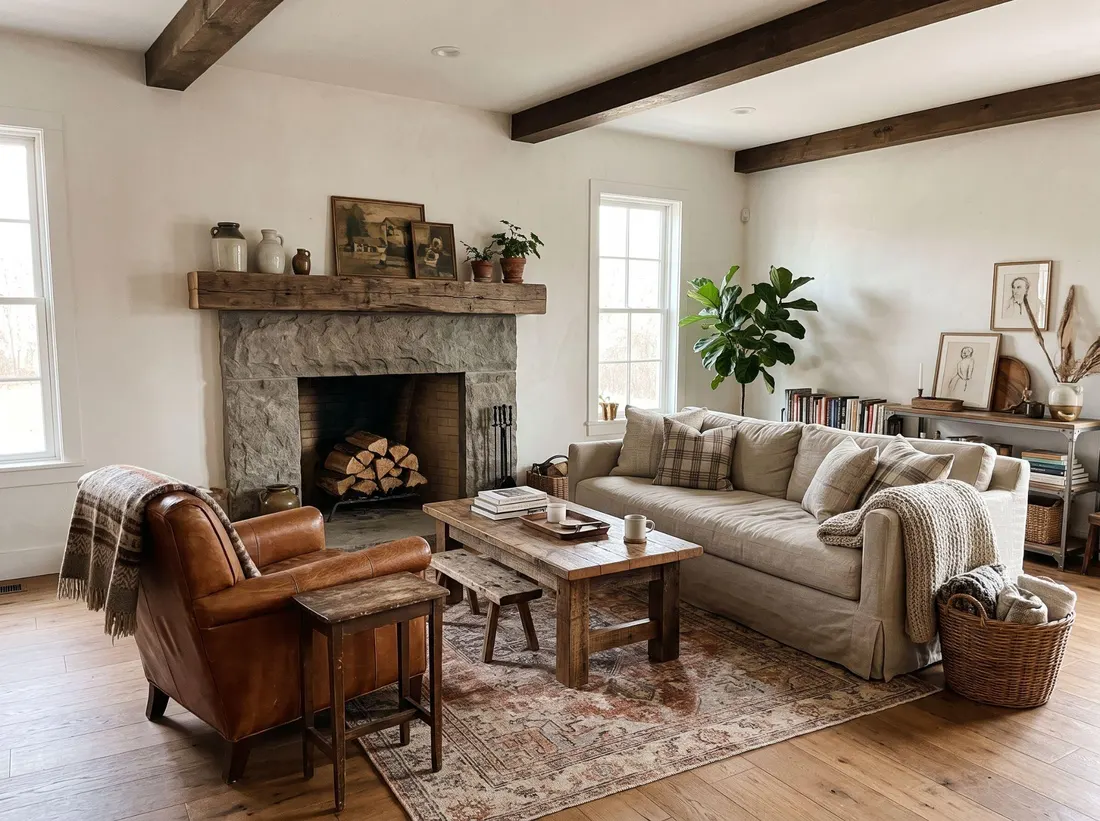
The fireplace is often the focal point. A rustic one has stacked stone from floor to ceiling and a thick timber mantel. A modern farmhouse fireplace may have a painted brick or shiplap surround and a simple mantel with a little greenery on top.
Lighting is where I see the most style mix-ups. Rustic rooms often have wrought iron chandeliers, lantern-style lights, or antler fixtures. Modern farmhouse rooms use black dome pendants, simple sconces, and clean-lined lamps.
Rugs help pull the whole look together. Rustic rugs are usually wool, in deep reds, browns, and greens, sometimes with a hide-style or kilim pattern. Modern farmhouse rugs lean neutral, like jute, light stripes, or washable low-pile options.
Wall decor is another place to tell them apart. Rustic walls might hold landscape paintings, framed maps, metal art, or mounted antlers. Modern farmhouse walls often have a big mirror, framed prints, and maybe ONE wood sign. Please, just one.
Here’s a quick checklist for each style:
- Rustic: leather sofa, slab coffee table, stone fireplace, iron chandelier, wool rug
- Modern farmhouse: slipcovered sofa, simple wood table, painted brick or shiplap, black pendants, neutral rug
Layout matters just as much as the pieces. Rustic rooms feel best when furniture is grouped close and cozy around the fireplace. Modern farmhouse rooms need breathing room, so leave some open floor and bare wall to keep that airy feel.
Last tip: buy the big pieces first and the small ones later. Sofas, tables, and rugs set the style, while pillows, throws, and frames are easy to change. That way, if your taste shifts a bit, you won’t be stuck with a room full of regrets.
How to Choose Between Rustic and Modern Farmhouse (or Mix Them)
To choose between rustic and modern farmhouse, think about your light, your space, and the mood you want. Pick rustic for a cozy, moody, nature-heavy feel. Pick modern farmhouse for a bright, clean, easy-to-maintain look.
Before you buy anything, ask yourself a few honest questions. How much natural light does the room get? How big is it? Do you have kids or pets that will test every fabric?
Dark rustic rooms look amazing in big, sunny spaces. In a small, dim room, though, they can feel like a cave. Modern farmhouse is usually the safer pick for small or low-light rooms because the light colors bounce the sun around.
Then think about your daily life. If you love a “sink into the couch” vibe, rustic leather and wool will feel great. If you want things easy to clean, modern farmhouse with washable covers is a lot more forgiving.
Now, what if you love both? Good news, you can mix them! I like a simple 70/30 rule: choose one style as your base (about 70 percent), then borrow a few things (about 30 percent) from the other.
For example, say rustic is your base. Keep the stone fireplace, the wood beams, and a leather chair. Then borrow modern farmhouse touches like light walls, linen pillows, and a black pendant light to brighten things up.
Or flip it. Start with a modern farmhouse base of white walls and a slipcovered sofa. Add a chunky reclaimed-wood mantel and a wool throw to bring in some rustic warmth.
I tried a 50/50 split once, and honestly, it looked confused. Half the room was dark and chunky, half was white and sleek, and nothing talked to each other. The moment I picked a “lead” style, everything clicked.
To tie a mixed room together, repeat things. Use the same wood tone in three spots, or the same black metal on the lamp, the curtain rods, and the picture frames. Repetition tells the eye that the choices were on purpose.
Budget matters, too. You don’t need to replace everything at once. Start with the cheap swaps like pillows, throws, lamp shades, and frames, then move on to rugs and lighting.
Here are the mistakes I see most often:
- Using too much dark wood in a small room
- Adding shiplap everywhere instead of on one wall
- Buying matching furniture sets, which feels flat
- Mixing more than two metal finishes
- Copying a photo exactly instead of making it personal
If you’re still stuck, try this. Save ten photos of rooms you love, then look for patterns. If most are dark and woodsy, you’re rustic. If most are white and bright, you’re modern farmhouse. And if it’s a mix? Well, you already know what to do.
Conclusion
So, what’s the real difference in the rustic vs modern farmhouse debate? Rustic is rugged, dark, and full of natural texture, while modern farmhouse is bright, clean, and a bit more polished. Both are cozy, both love wood, and both can make a living room feel like home.
The best part is that you don’t have to follow the rules perfectly. Think about your light, your space, your family, and how you want to feel when you walk in. Then borrow what you love from each style and leave the rest.
A quick safety note, too. If you use reclaimed or antique wood, ask where it came from, because old painted wood can contain lead paint and should be tested and sealed or avoided. And keep candles, dried greenery, garlands, and other flammable decor well away from your fireplace and mantel.
Now I’d love to hear from you! Which style are you leaning toward, rustic, modern farmhouse, or a mix of both? Share your own tips, wins, or “oops” moments in the comments below, and I’ll see you there.